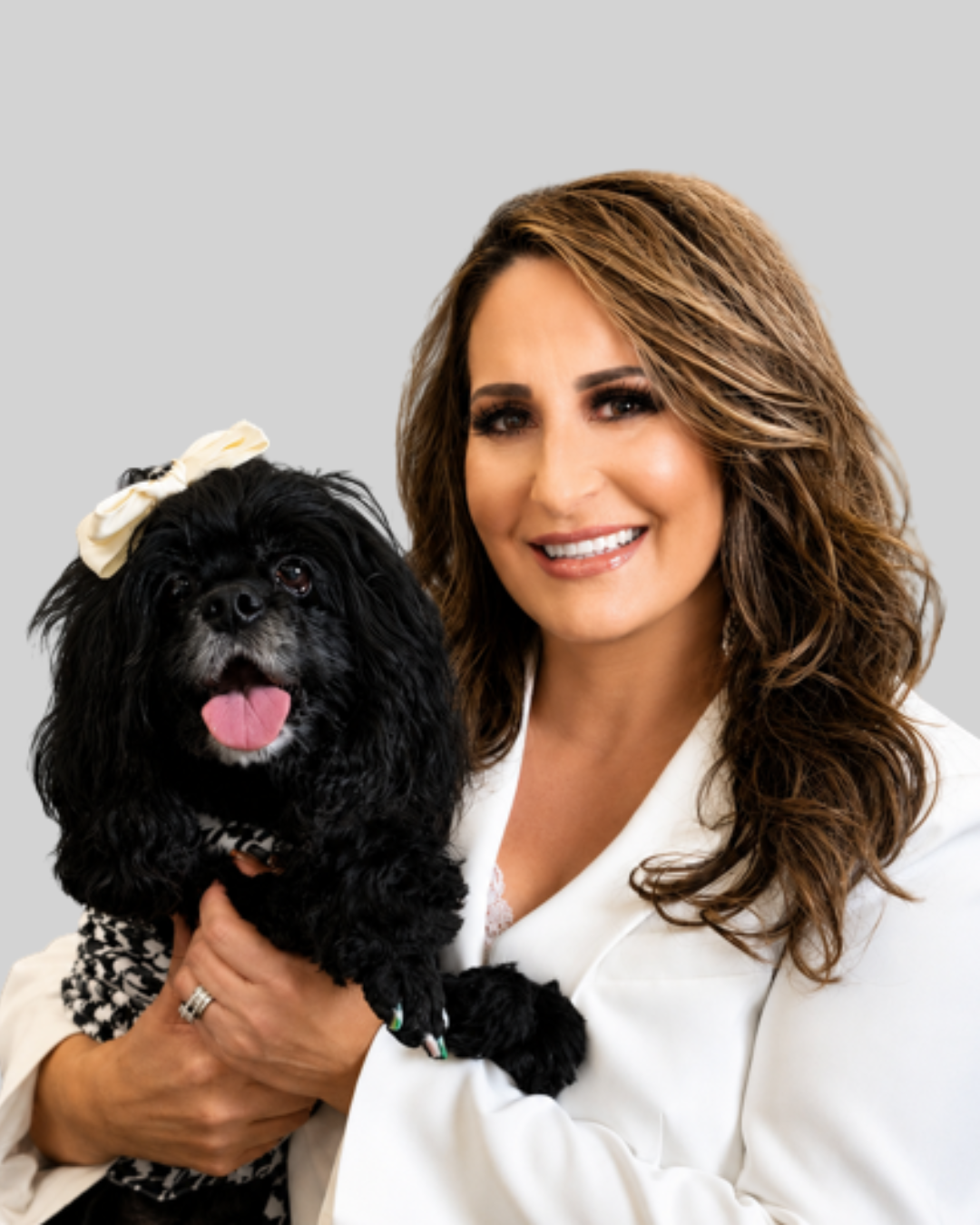
Nichole Smith
Director, Personal Lines Division
INVST Protect
Protect what you’ve built, so you can build what’s next.
Protection is not a product. It's a promise—to your family, your business, and yourself.
Who I Am
I'm a Brownsburg, Indiana native with over 20 years of experience as a business owner and entrepreneur. Before transitioning into the insurance industry, I served as a closing manager with a real estate company, which gave me deep insight into one of life's biggest financial decisions—buying a home.
I've been married to my high school sweetheart, Tony, for 32 years, and we share our lives with our fur child, Princess Luxora. My personal journey has taught me that the foundation of every great life is protection—not just policies, but peace of mind.
Why I Joined INVST Protect
After 20+ years building my own business and helping families protect what matters most, I was looking for a partner who shared my values—putting clients first, educating rather than selling, and building long-term relationships.
When INVST Protect approached me, it was clear this was more than just an acquisition. It was a shared belief that protection is the foundation of every great financial plan. Joining INVST Protect allowed me to expand what I can do for clients while staying true to what I've always believed: your biggest asset deserves the strongest protection.
What Makes My Approach Different
I like to call myself the “Nancy Drew of insurance”—I solve insurance mysteries daily, especially for clients with unique or complex scenarios.
Most agents lead with products and pricing. I lead with questions:
- What are you protecting?
- What keeps you up at night?
- What would happen to your family or business if something happened to you?
Once I understand the full picture, I design a protection strategy that actually fits your life. For me, it's not about selling a policy—it's about creating peace of mind.
What I Specialize In
My sweet spot is working with clients who have more complex protection needs:
- Luxury homes and estates – High-value properties requiring specialized coverage
- Collector cars – Classic and exotic vehicles that need proper protection
- Business owners – Coordinating personal and business protection strategies
- First-time homebuyers – Building a solid financial foundation from day one
What ties all of these together is education. Whether you're buying your first home or insuring a multi-million dollar estate, I help you understand what you're protecting and why.
What INVST Protect Means to Me
INVST Protect is the formalization of something I've always believed: protection isn't optional, and it's not separate from your financial plan. It's the foundation.
Before you can grow wealth, accelerate toward your goals, or build a legacy, you have to protect what you've already built.
At INVST Protect, we don't just sell insurance—we integrate protection into the full financial picture. That means working alongside CPAs, estate attorneys, and financial advisors to make sure nothing falls through the cracks. It's comprehensive, coordinated and “client-first.”
How I Work With Clients
I follow the INVST methodology, with risk management built into each stage:
1. Discover
Start with you and your Why. Understand your long-term vision and what you're protecting.
2. Educate
Build knowledge and confidence. Demystify protection products so you can make informed decisions.
3. Guide
Design a comprehensive protection plan tailored to your specific needs and goals.
4. Counsel
Integrate risk management into your broader financial picture, in coordination with your advisory team.
5. Partner
Ongoing support and adaptation as your life, business, and goals evolve.
Credentials + Recognition
Recognition, credentials, licenses, and registrations are provided for informational purposes only and do not imply endorsement, a guarantee of future experiences or results, or a particular level of skill or training.
Property & Casualty Licensed Agent
Fully licensed and qualified to serve clients across all personal lines insurance needs.
Nominated Indiana Agent of the Year
Recognized for excellence in client service and industry leadership.
Million Dollar Club Member
Achievement recognition for exceptional production and client impact.
20+ Insurance Carrier Partners
Access to best-in-class coverage options and competitive rates.
Glossary
Glossary of frequently used terms.
Co-Insurance
In property insurance, Coinsurance is a penalty imposed on the insured by the insurance carrier for underreporting / declaring / insuring the value of the tangible property or business income. It also applies without concealment for the insured to bear some responsibility and thus reduce moral hazard. The penalty equates to a percentage stated within the policy and the amount underreported. As an example: A buildings replacement cost valued at $1,000,000 has an 80% coinsurance clause but is insured for only $750,000. Since its insured value is less than 80% of its replacement value, the insurance payout will be subject to the underreporting penalty when it suffers a loss. For example, if it suffers a $200,000 loss, the insured would recover $750,000 ÷ (0.80 × 1,000,000) × 200,000 = $187,500 (less any deductible). In this example, the underreporting penalty would be $12,500. More generally, suppose a building with replacement cost R covers the amount I, with a coinsurance requirement c, expressed as a number between 0 and 1 (e.g., 0.8 for an 80% coinsurance clause). If this building suffers a loss L, then the insurance payout (fewer deductibles) would be the smallest of the three amounts, L, I, and IL/(cR). The first two alternatives reflect the fact that the payout will not exceed the loss nor the coverage amount of the building, while the last amount represents the intended action of the coinsurance requirement to penalize underreporting. The most commonly issued coinsurance percentage would be 80%, but it can be as high as 100%, which would impose the greatest penalty for underreporting. Thus, the property values need to be accurately reported and updated annually to reflect inflation and other increases in cost.
Replacement Cost
The amount it would cost to replace an asset at current prices. Suppose the cost of replacing an asset in its current physical condition is lower than replacing the asset to obtain the level of services enjoyed when initially purchased. In that case, the asset is in poor condition, and the firm would probably not want to replace it.
Blanket Insurance
A single property insurance policy that provides coverage for multiple classes of property at one location or provides coverage for one or more classes of property at multiple locations.
Split Limit
Separately stated limits of liability for different coverages, which may be stated on a per person limit, per occurrence, property damage limit. The state of Indiana has a basic $25,000/$50,000/ $10,000 split limit policy.
Underinsured Motorist
Coverage in an automobile insurance policy under which the insurer will pay costs up to specified limits for bodily injury if the liable driver’s policy limits are exhausted, and they cannot pay the full amount for which they are liable.
Inflation Guard
A coverage extension that automatically increases amounts of insurance on buildings by an agreed upon percentage annually.
Additional Insured
Individuals or Business that are not named as insured on the declaration page, but are protected by the policy, usually in regard to a specific interest.
Actual Cash Value
In the property and casualty insurance industry, Actual Cash Value (ACV) is a method of valuing insured property or the value computed by that method. Actual Cash Value (ACV) is not equal to replacement cost value (RCV). ACV computes by subtracting depreciation from replacement cost.[1] The depreciation usually calculates by establishing a useful life of the item, determining what percentage of that life remains. This percentage multiplied by the replacement cost equals the ACV. For example, a man purchased a flatscreen for $2,000 five years ago, which was destroyed in a hurricane. His insurance company says that all televisions have a useful life of 10 years. A similar television today costs $2,500. The destroyed television had 50% (5 years) of its life remaining. The ACV equals $2,500 (replacement cost) times 50% (useful life remaining) or $1,250. This concept is different from the book value used by accountants in financial statements or for tax purposes. Accountants use the purchase price and subtract the accumulated depreciation to value the item on a balance sheet. ACV uses the current replacement cost of a new item.
Inland-Marine
Scheduled Personal Property endorsement used to insure Personal Property with high values such as furs, antiques, and jewelry.
Umbrella Liability
Coverage that provides extra protection against liability, and excess amount of insurance above the primary policy.
Monoline Policy
Policy written separately as a single coverage.
First-Named Insured
An individual whose name appears first on the policy’s declaration.
Ready to Protect What You’ve Built?
Let's have a conversation about protecting what matters most to you.